
Bowl Game Branding: A Breakdown of College Football’s Biggest Stages
I’m a lifelong college football fan, and one of my favorite parts of football season has always been the bowl games. Bowl games sit at a unique intersection of sports, entertainment, travel, and brand marketing. They’re what a team works for all year, a fun reward for a successful six-win season. They’re also an excellent way for a brand to get its name in front of millions of sports fans. Most bowl games are tied to a title sponsor, usually a brand and occasionally an individual. To name a few, there’s the TaxSlayer Gator Bowl, the Cheez-It Bowl, and the Snoop Dogg Arizona Bowl, presented by Gin & Juice by Dre and Snoop Dogg himself. What makes bowl season especially interesting is that no two games feel the same. Each bowl game has its own traditions, tone, and fan experience.
That’s what makes bowl season especially fun for me to watch through both lenses. As a marketer, I love tuning in to different bowl games to see how each sponsor approaches the overall experience, from event planning and in-game festivities to field design and unique activations. As a football fan, I enjoy watching a good football game, even if I don’t have a personal tie to the teams playing. Bowl season is a win-win for me because it ends up being a rare overlap where my personal interests and professional instincts collide.
As a former University of Louisville Ladybird, I had the opportunity to participate in two bowl games: the Music City Bowl in 2019 and the Holiday Bowl in 2023. In honor of the 2025-2026 bowl season, I want to break down the bowl games I’ve been part of and what stood out to me from a marketing perspective. We’re also going to look at a few bowl games I haven’t attended but consistently tune into because of their strong branding. This will be a long, detailed dive into bowl game branding, so buckle up and enjoy the ride!
Why Bowl Game Branding Works
Bowl games are one of the rare sports properties that attract diehard fans and casual viewers while blending live events, destination travel, and TV spectacle. They’re also seasonal, limited-time events, which increases urgency and memorability. Most teams don’t go to the same bowl game every year, so when a fan’s own team earns a bid, that specific bowl suddenly carries personal meaning. For fans, it’s a moment tied to their team’s season, which makes fans more inclined to attend, celebrate, and buy commemorative merchandise. Fans are willing to pay for a shirt that says they attended the bowl game, especially if it features their team’s logo.
From personal experience, bowl games tend to sell out of merchandise fast. I remember going to two different stands during the Holiday Bowl to pick up the right-size shirts for my siblings because they had quickly run out of the ones I was looking for. That experience reinforced how emotionally driven bowl game purchases are. Fans aren’t just buying apparel for themselves; they’re buying proof they were there and souvenirs for the people who couldn’t be there with them.
For brands, bowl games offer exposure, storytelling opportunities, and a chance to turn sponsorship into entertainment instead of interruption. Rather than appearing as a commercial break, the brand becomes part of the event itself, woven into the visuals, traditions, and moments fans remember and talk about afterward.
Strong bowl branding can elevate a game you may not have been interested in previously. In the past, I’ve watched bowl games solely for the branding, not knowing a single thing about the two teams playing. In contrast, weak bowl branding forces the game itself to do most of the heavy lifting. If the bowl game's premise isn’t compelling and the in-game action is lackluster, the matchup has to be a close thriller or a blockbuster showdown to keep viewers engaged.
What Makes a Bowl Game Entertaining
1: The Matchup
Certain matchups naturally draw attention because both teams are competitive or culturally relevant. Fans are much more likely to tune in when the teams are evenly matched. Even without playoff implications, the perceived quality of the matchup matters. When bowl games are announced, my dad and I usually scroll through the list together, looking for the games that feel like “can’t-miss” matchups. To us, that typically means teams that narrowly missed the playoffs or finished the season strongly. When we saw matchups like BYU vs. Georgia Tech in the Pop-Tarts Bowl or Texas vs. Michigan in the Cheez-It Bowl, our reaction was immediate: those are going to be fun games. We don’t have a personal connection to those teams, but we know the game itself will be entertaining. Strong matchups give bowl games a solid foundation before branding even comes into play.
2: The Location
For any sporting event, location directly impacts fan travel, player experience, and the overall perception of the bowl. Generally, big or destination cities are more appealing because they offer a lot on the tourism front. For instance, Orlando offers theme parks and tourist attractions to visit in between bowl festivities, and San Diego offers beaches, landmarks, and a rich city culture to immerse yourself in. The event location becomes part of the brand story, not just a background. Some bowl games lean into this wholeheartedly, like the New Orleans Bowl, which embraces the city’s food, music, and party atmosphere to create an experience that feels unmistakably “New Orleans” from start to finish.
3: The Sponsor and Branding
Bowl games are a creative playground for sponsors across industries. Something I’ve noticed over the years of watching bowl games is that food brands consistently excel at bowl game marketing. That’s mainly because they already have recognizable mascots, strong visual identities, and products that translate naturally into concessions, props, and playful in-game moments.
A few bowl games sponsored by food brands are:
Pop-Tarts Bowl
Cheez-It Bowl
Chick-fil-A Peach Bowl
Tony the Tiger Sun Bowl
Bush’s Boca Raton Bowl
Service-based brands face a different challenge when creating a standout bowl game. Mortgage companies, telecoms, restoration services, and similar sponsors don’t have a tangible product to build stunts or visuals around. As a result, the experience itself has to carry more weight than the advertised service. In these cases, branding tends to rely on visibility and repetition rather than product integration. Logos, signage, and broadcast mentions become the primary tools for maintaining brand presence without overwhelming the game itself.
In any case, the best bowl sponsors understand their limitations and design around them, and they know not to over-brand. After all, the bowl game should always center on the teams playing, not the sponsor. These programs worked all season to earn a bowl bid, and effective branding enhances that achievement rather than competing with it. When done right, sponsorship feels additive, not distracting.
Why Bowl Games Appeal Beyond Sports Fans
Bowl games often feel like events more than competitions, and the reason for their broad appeal is similar to why people who never watch football still tune in to the Super Bowl. They’re marketed as full-scale spectacles, not just games. Non-sports fans may tune in for the gimmicks, celebrity appearances, halftime performances, or to see what all the buzz is about. Bowl games permit viewers to enjoy the atmosphere without needing deep knowledge of the sport, making them far more approachable than a typical regular-season matchup.
When branding leans into entertainment, the game becomes more shareable, and moments travel far beyond traditional sports audiences. Over-the-top celebrations, mascot antics, and unexpected stunts often generate viral clips that circulate on social media, reaching people who might not otherwise engage with college football. This crossover appeal is where bowl games can outperform many regular-season games, because the value extends beyond the final score and into cultural conversation and digital visibility.
Bowl Games I’ve Attended: A Personal & Marketing Perspective
Music City Bowl — Nashville, Tennessee (2019)
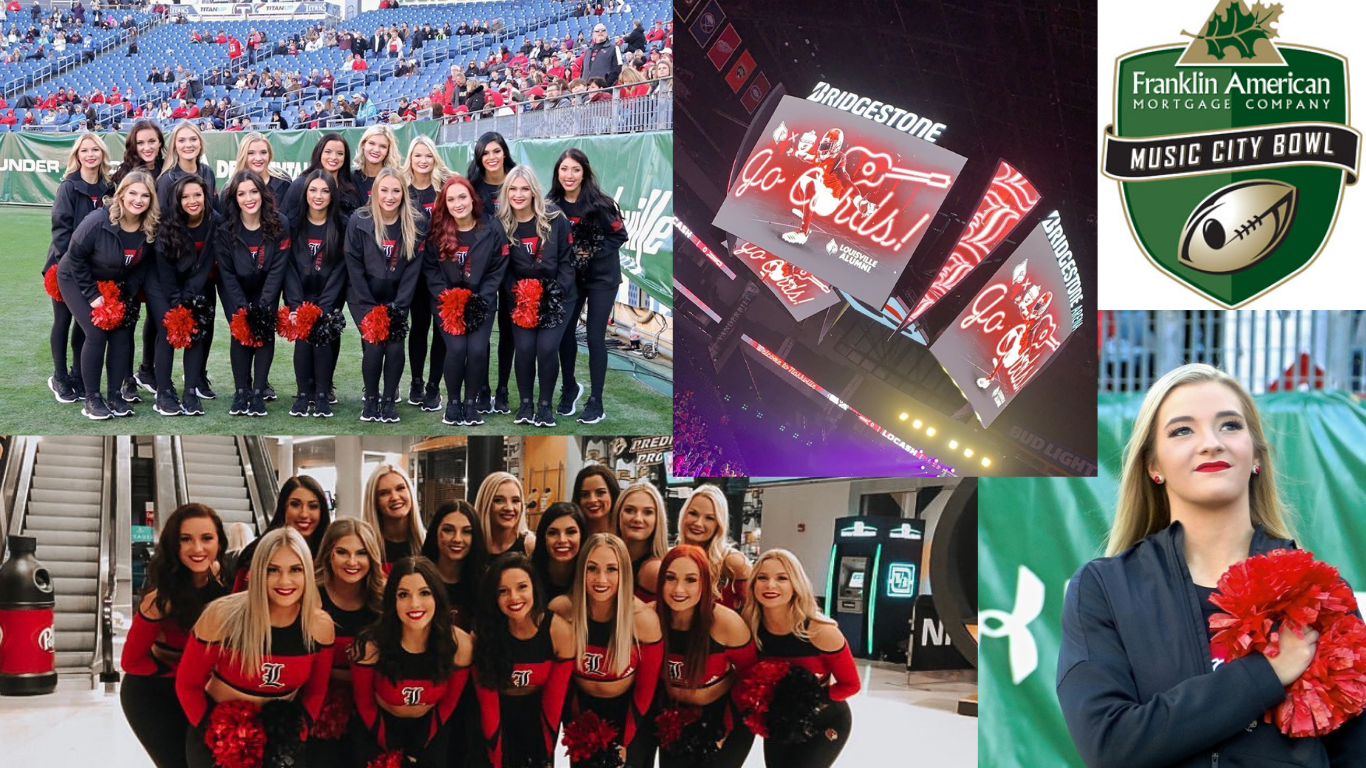
I had the opportunity to be part of the Music City Bowl my freshman year, and it was one of the first major games I ever attended on the sidelines. We stayed in Nashville for a few days to participate in a couple of fan events hosted by Louisville. The first night we were there, we went to a saloon in downtown Nashville to greet fans at a watch party for the Louisville vs. Kentucky basketball game happening that evening. The second night, we appeared at another fan event in Bridgestone Arena, home of the Nashville Predators. We greeted fans at the door, danced with the band, and enjoyed a concert inside the arena after everyone arrived. The bowl game was played in Nissan Stadium, home of the Tennessee Titans. The game itself was, unsurprisingly, heavily themed around country music to pay homage to Music City. There were fewer large in-game spectacles compared to other bowl games, but it was still an enjoyable experience overall. It was even more satisfying because Louisville won the game, and we had a strong turnout of fans due to Nashville’s close proximity to Louisville.
From a marketing perspective, the city itself did much of the branding work, and Nashville’s identity carried the experience. This bowl relied more on destination appeal than on over-the-top brand activation. At the time, the Music City Bowl was sponsored by Franklin American Mortgage Company, and there’s only so much you can do creatively as a mortgage company. There were few brand-based spectacles given the nature of the business, but there was a strong emphasis on logo placement and name repetition. Their advertising during the game felt tasteful and well-balanced, never overwhelming the viewing experience. This bowl is a clear example of brand awareness taking priority over brand experience, where the goal is recognition rather than interaction. Not every bowl needs spectacle to succeed or be memorable, and simpler branding can still work when location, atmosphere, and fan turnout are strong.
Holiday Bowl — San Diego, California (2023)
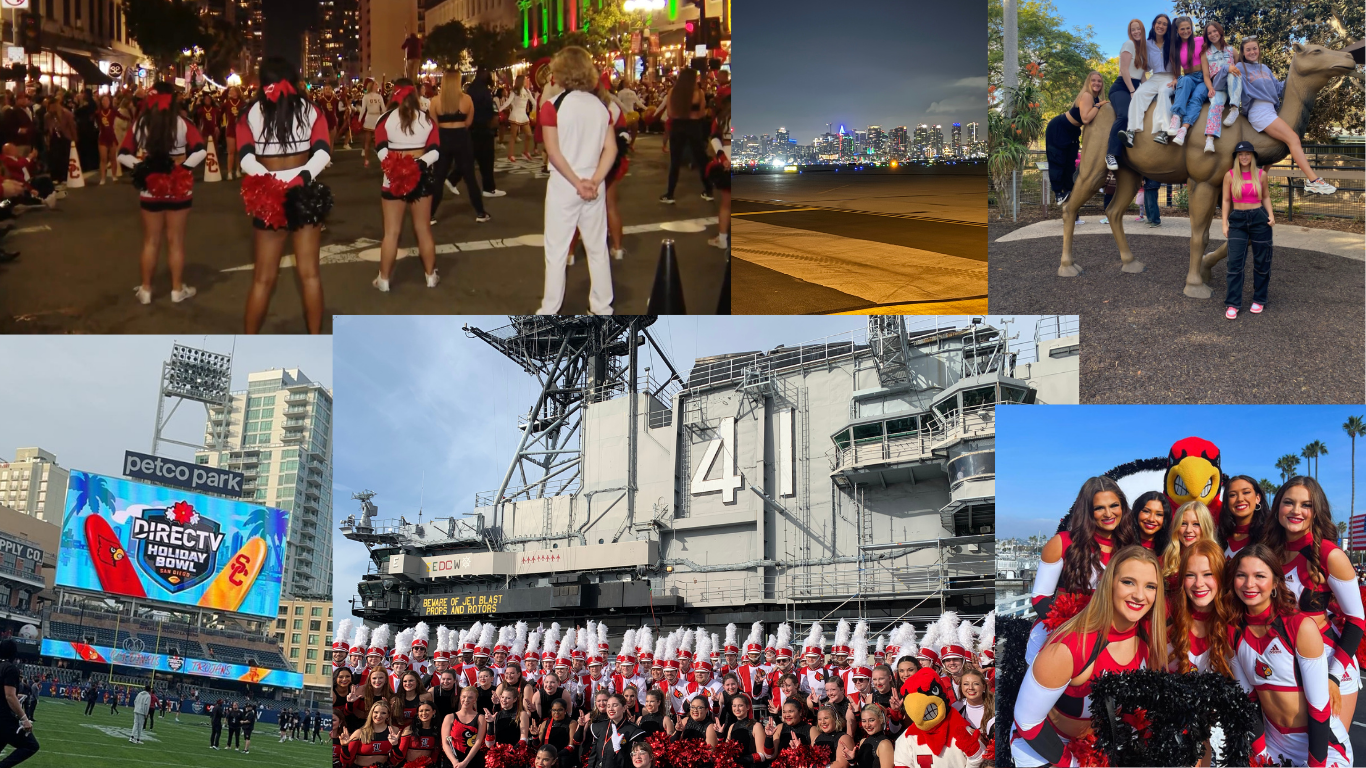
My fifth year, I was incredibly excited to be part of the Holiday Bowl. It was my first time going to California, and it was also my first bowl game post-COVID that I attended as a Ladybird. What stood out to me most was the sheer number of events scheduled before the game compared to the Music City Bowl. We performed with the band on the USS Midway, received a complimentary tour afterward, and then participated in the Battle of the Bands in the historic Gaslamp Quarter. We were also part of a large parade along San Diego's coast. It was my first time being in a parade, and being involved in the event gave me a new appreciation for how much coordination these events require. The weather was beautiful the entire trip, and we had time to explore the city and visit the San Diego Zoo in between bowl game festivities.
The game was played at Petco Park, home of the San Diego Padres. Seeing a baseball stadium transformed into a football venue added an unexpected layer of novelty, and the conversion was executed seamlessly. It felt different from a traditional football stadium, but in a way that enhanced the experience rather than detracted from it. The extra space allowed for creative premium experiences, including pickup trucks positioned along the field that fans could rent to watch the game. These areas made the game feel more interactive and personalized, turning spectators into participants rather than passive viewers. Unfortunately, Louisville didn’t win the game, but the massive fireworks show afterward helped end the night on a high note.
From a marketing perspective, the Holiday Bowl excels at integrating city, community, and spectacle. It made me associate San Diego with celebration, hospitality, and experience-driven events, to the point where I’d love to return one day to explore more of the city. The Holiday Bowl festivities were stretched across multiple days rather than concentrated on game day alone. That extended timeline gives fans more incentive to travel early, stay longer, and fully immerse themselves in the experience. The bowl felt like a citywide celebration rather than a single event, and I walked away with fond memories of both the game and San Diego itself. The Holiday Bowl is a strong example of immersive event marketing done right.
Bowl Games I Love From a Branding Perspective
Pop-Tarts Bowl — Orlando, Florida
The Pop-Tarts Bowl is by far my favorite bowl game, and attending it is firmly on my bucket list. It’s whimsical, chaotic, and perfectly on brand for Pop-Tarts. Everything about this bowl aligns with the brand’s “Crazy Good!” slogan. Throughout the game, Pop-Tarts mascots interact with players, officials, and fans, building anticipation around which flavor will ultimately be selected by the winning team. At the end of the game, the winning team chooses a Pop-Tarts flavor. That mascot is then “lowered” into a giant toaster, and a life-sized cake shaped like that Pop-Tart emerges for the team to celebrate with.
I’ve included the full trophy and Pop-Tart selection ceremony from last year’s game below:
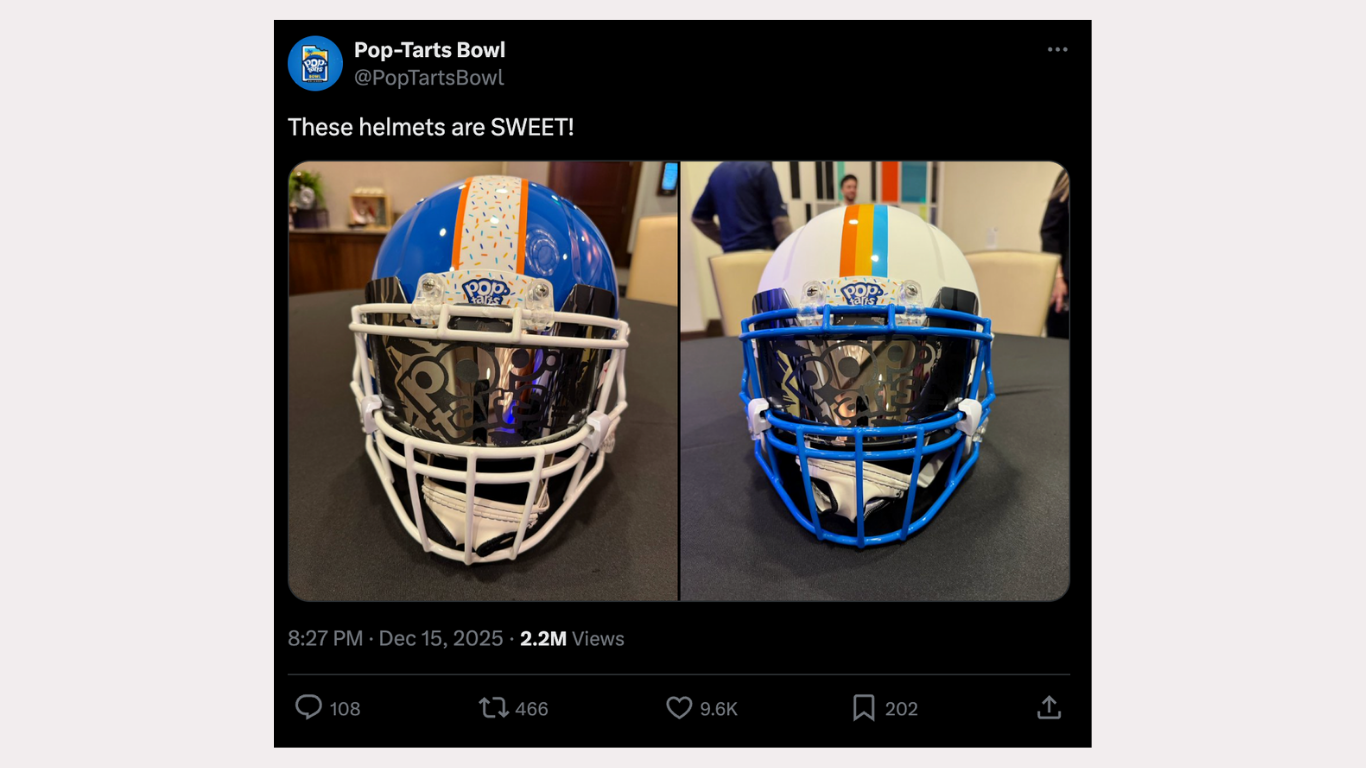
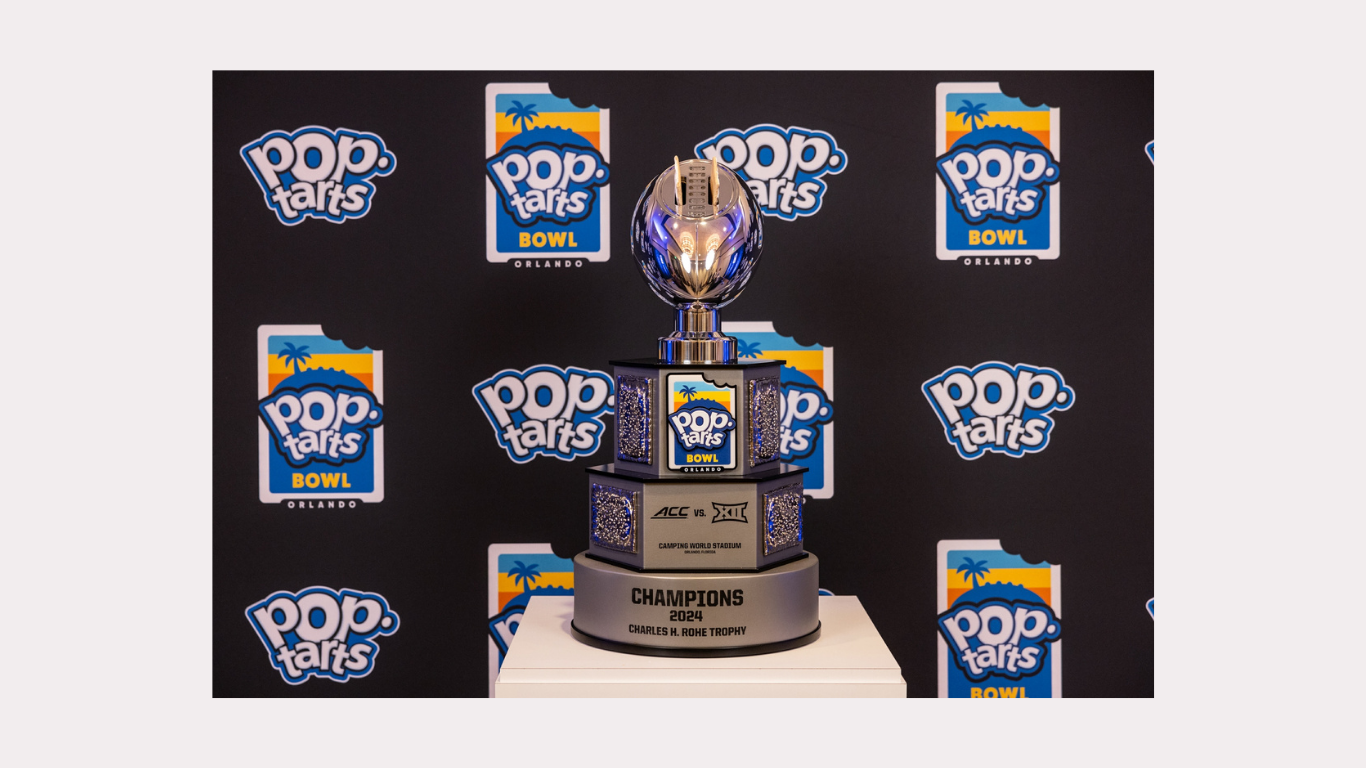
The overall presentation of the Pop-Tarts Bowl is exceptionally well thought out. The sidelines are covered in sprinkle graphics, the helmets feature custom designs that match the field and logo, and the trophy itself includes a fully functional toaster. This is still a relatively new bowl game, but in just three years, it has become a fan favorite. Each year, the execution gets bigger, bolder, and more creative. This bowl is one of my favorites as a marketer because it’s a masterclass in experiential branding. Pop-Tarts doesn’t just sponsor the game; it becomes the entertainment, the storyline, and the big moment fans remember long after the game is over.
Source: @PopTartsBowl on X
Source: GE Appliances Pressroom
Snoop Dogg Arizona Bowl — Tucson, Arizona
The Snoop Dogg Arizona Bowl is sponsored by Gin & Juice, the beverage brand created by Snoop Dogg and Dr. Dre. What makes this bowl unique is that the branding centers less on the product and more on Snoop himself. I’m a big Snoop Dogg fan, so I tuned in for the inaugural game last year out of pure curiosity. Snoop called part of the game, gifted chains to the MVP, and entered the field in a 1964 Chevy Impala for the trophy presentation. His visible enthusiasm made the broadcast feel lively and unscripted, a rarity for sponsored sporting events.
The Snoop Dogg Arizona Bowl felt less like a corporate sponsorship and more like a personal passion project, which is refreshing in a space that can often feel overly commercialized. Snoop’s personality alone drew me in. I didn’t need to know anything about the teams playing. I was watching because I wanted to see how Snoop would show up and what he’d do next.
Rose Bowl — Pasadena, California
The Rose Bowl represents prestige, tradition, and excellence. Earning a spot in this game is a clear signal of success, and that reputation has been carefully maintained over decades. Unlike many modern bowls that rely on novelty, the Rose Bowl leans into history and consistency. Its branding is elegant, restrained, and instantly recognizable. The rose motif is versatile and seamlessly integrates with nearly any team’s identity. What stands out most to me is the merchandising. Fans and designers continuously find new ways to reinterpret the rose, creating designs that feel fresh without straying from the bowl’s classic image. The Rose Bowl proves that minimalism, tradition, and consistency can be just as powerful as spectacle when executed with intention. I’m an Indiana fan, so I’ll be tuning into this bowl game to watch the Hoosiers play. I’m excited to see the overall execution of this timeless event!
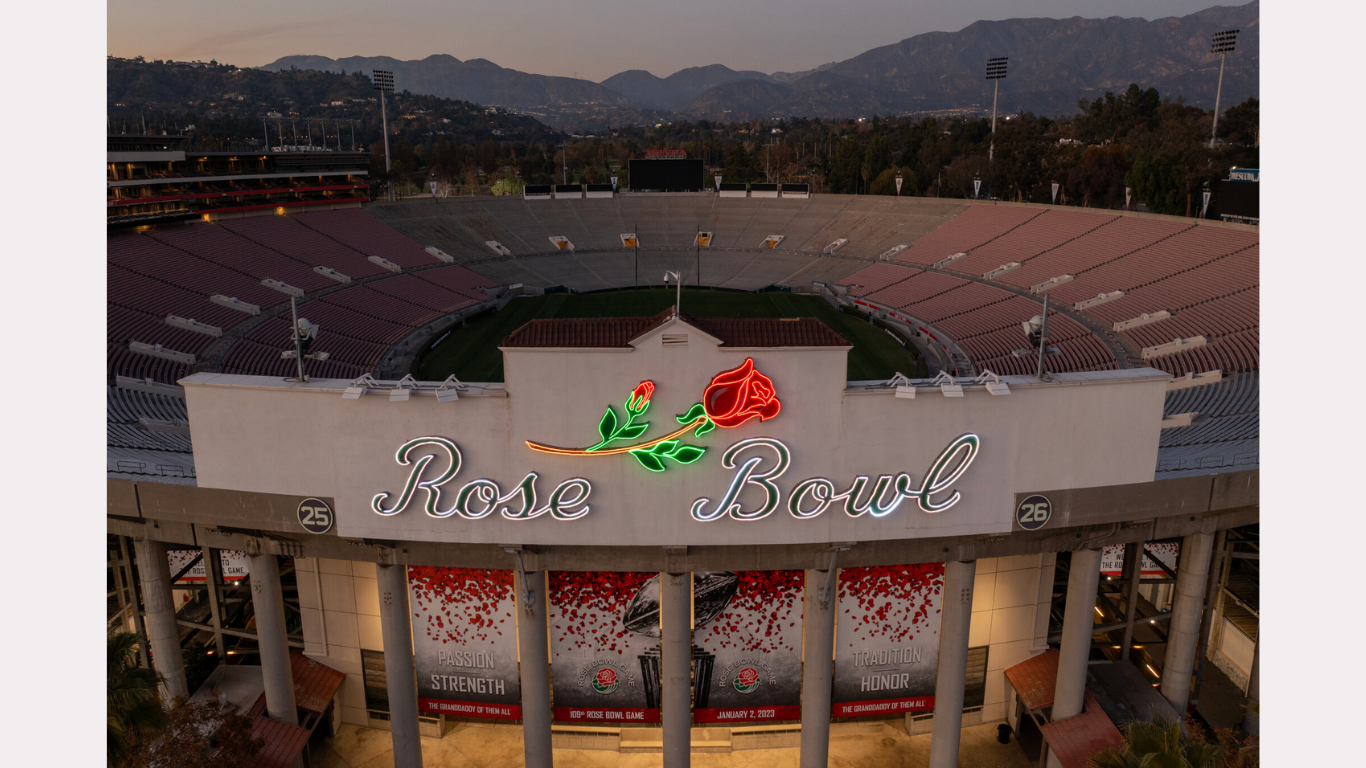
Source: New York Times
Bush’s Boca Raton Bowl — Boca Raton, Florida
As a Louisville fan, I’ve been following the Bush’s Boca Raton Bowl closely this year, and I’ve been impressed with the early marketing. This is Bush’s first year sponsoring the game, and they’ve already made a strong impression. They’ve leaned into playful branding by calling it the “Bowl of Beans” and offering free admission to the first 2,000 fans who arrive with a can of Bush’s baked beans. I also loved the custom bag tags they introduced.
The Bush’s Boca Raton Bowl shows how quickly a brand can establish personality with the right tone. Even before kickoff, they’ve built anticipation and goodwill through humor and fan-focused incentives. Based on what I’ve seen so far, I’m excited to see how Bush’s carries that energy into the in-game experience.
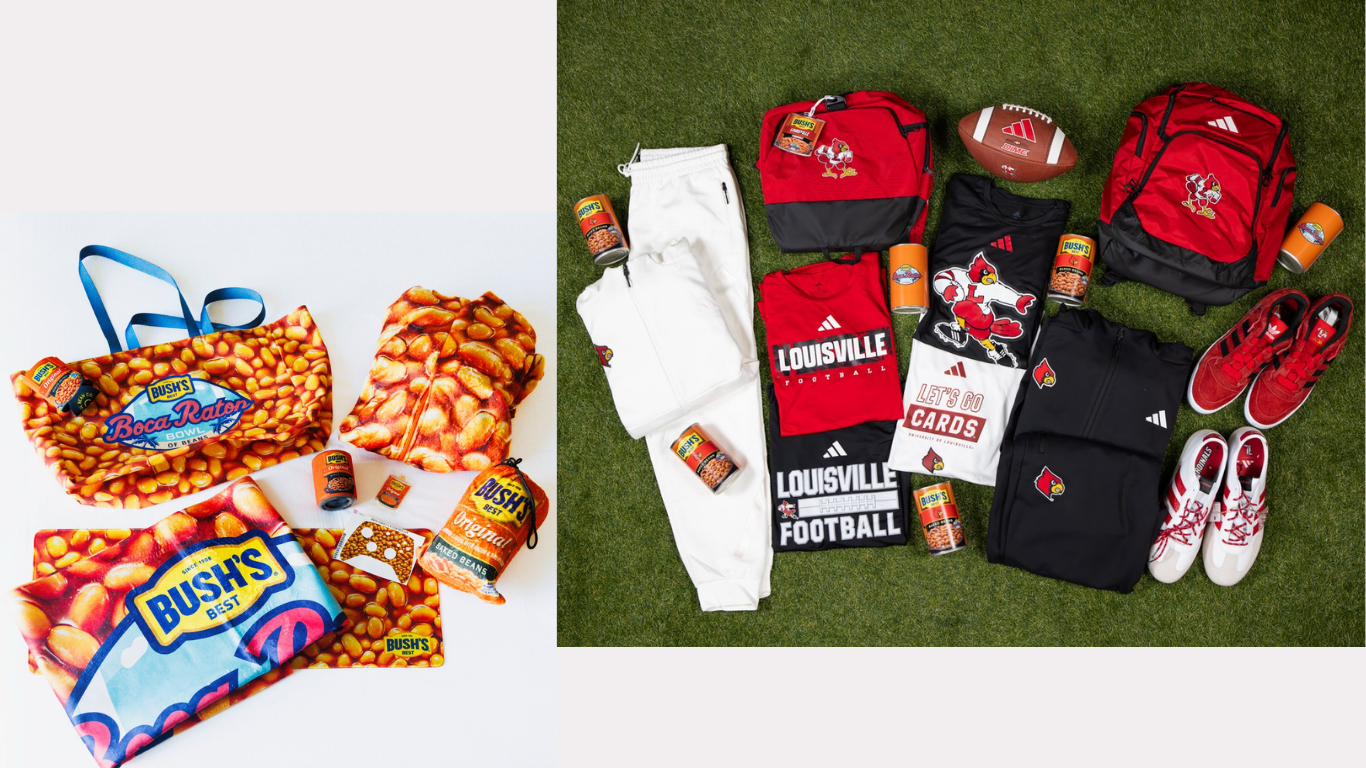
Source: @LouisvilleFB on X
Xbox Bowl — Frisco, Texas
The Xbox Bowl is one of the newest additions to bowl season, and it’s already showing strong potential. From a marketing perspective, the trophies immediately stood out. Designing MVP trophies to resemble in-game achievements is a clever nod to gaming culture and fits Xbox’s brand identity perfectly. Every player also received a free Xbox ROG Ally handheld console, which reinforces the idea that the sponsorship delivers real value to participants. By aligning rewards with what players and fans actually care about, Xbox is positioning this bowl as one to watch. If the execution remains consistent as this bowl evolves, this game could become a standout example of modern bowl branding.
Final Whistle
When branding is done well, it doesn’t distract from the game. It enhances it. It turns a matchup into a memory, a destination into an experience, and a sponsor into part of the story fans remember long after the final score. Whether it’s a classic bowl game like the Rose Bowl or a newer, more playful entry like the Pop-Tarts Bowl, strong branding gives each game a distinct personality.
Bowl season is proof that marketing and sports don’t have to compete with each other. At their best, they work in sync, creating moments that appeal to diehard fans, casual viewers, and even people who don’t usually watch football at all. As for me, I’ll be watching this bowl season closely, both as a marketer and a fan, while cheering on Louisville and Indiana along the way. Go Cards and go Hoosiers!
What’s your favorite bowl game, and what makes it memorable to you?
